

The thickness of the wire (cross-sectional area of the wire) corresponds to the load capacity, that is, the allowable normal working current. Purely theoretically, the thicker the wire diameter, the smaller the line loss, and the smaller the wire diameter, the greater the line loss. This is not wrong. But you can't blindly increase the diameter in order to save electricity once every 10 years. This is neither economical nor necessary. The selection should be based on the allowable nominal current of the wire to match the maximum working current of the line. As for someone who mentioned that the working current of the short-circuit fault increases sharply, this can not be solved by thickening the wire diameter, but by selecting the appropriate circuit breaker in the distribution box to ensure the safety of electricity use.
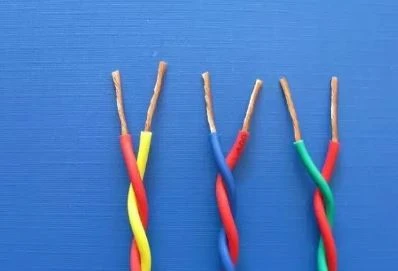
Thin wires will consume more power. There are two reasons. First, when the wires are thin, the resistance is large, and the heat generated under the same current is large, which consumes more power. Second, when the resistance is large, the voltage drop is large, and the voltage of the final load is low. For many loads, such as motors, the low voltage will lead to low efficiency, the current will increase instead, and the power consumption will increase significantly.
The smaller the wire, the greater the resistance, which will consume more power relatively, but the multi-loss part is almost negligible!
It's not that thicker wires save power!
It depends on the specific situation. When the circuit is connected, it is found that the wire is heated, and the electric energy is consumed in part of the wire. Of course, the wire is finely charged. Note that in this case, the thicker wires should be replaced in time to prevent accidents!


